Solar roofing or solar panels: what belongs on your next roof?
Solar shingles combine a roof covering with electricity generation. Compare them with rooftop panels, and understand the roof, electrical and budget questions before you commit.
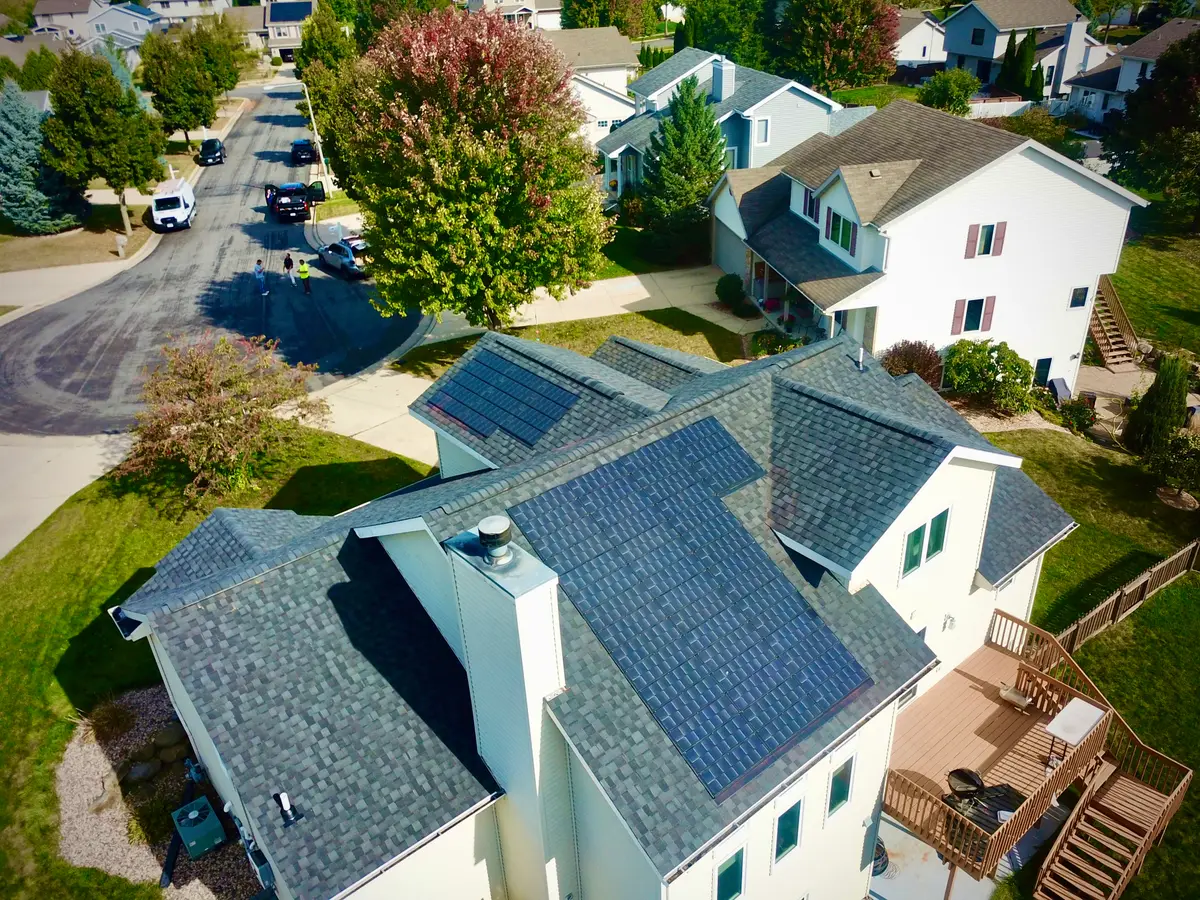
Two ways to put sunlight to work
Conventional rooftop solar uses modules mounted above a roof covering. Building-integrated photovoltaics puts electricity-generating elements into the building material itself. Solar shingles and solar tiles are roofing examples of that approach. The visual difference is easy to see; the practical decision reaches beyond appearance.
The Department of Energy explains that a photovoltaic system includes more than its modules. Inverters convert the electricity for use, and the system needs appropriate mounting or integration, wiring and other equipment. Batteries are an additional component, rather than something automatically included with a solar roof.
A current example: Timberline Solar ES 2
GAF's current Timberline Solar ES 2 system combines energy shingles with traditional Timberline asphalt shingles. Its published specification lists 57 watts per energy shingle. That is a component power rating, not a prediction of the electricity your home will produce over a day or year.
A proposal should identify the exact generation of the product, the amount of active solar area, inverter equipment and system design. Ask the installer to distinguish electricity-generating shingles from the surrounding roofing. A large roof does not mean every square foot will generate power. Confirm current local availability, installer coverage and the expected schedule directly; a national product page is not a local installation commitment.
Start with the roof's remaining life
If your roof already needs replacement, compare an integrated solar roof with two coordinated projects: a conventional new roof and a rooftop panel system. Request both as complete installed scopes. Otherwise it is easy to compare a combined roofing-and-energy price against a panel-only price that leaves out a new roof.
If your current roof is in good condition, first ask what work an integrated installation would require and why. For either approach, identify who is responsible for penetrations, flashings, waterproofing and future leak investigation. Include the cost and responsibility for removing and reinstalling energy equipment if roof work becomes necessary later.
Seattle sunlight needs a site-specific assessment
Seattle City Light's solar planning guidance emphasizes access to sunlight, roof orientation and shading from trees, chimneys and nearby buildings. A sunny street address does not establish how much useful sunlight reaches a particular roof plane. Ask for a design that shows the proposed active areas and the obstructions included in the analysis.
Request estimated annual production with the assumptions behind it, and compare that estimate with your household's electricity use. Also confirm the current utility interconnection process and applicable export-billing arrangement. A neighbor's utility or an older installation may have different requirements from your project. City Light is the relevant starting point for its customers; Eastside homeowners should verify their own serving utility.
Check the electrical work and backup plan
Ask whether the proposal includes electrical-service changes, required approvals, monitoring and commissioning. Identify who coordinates roofing and electrical work, and who will respond if the roof is dry but the system stops producing. Keep equipment schedules and service contacts with your roofing records.
If outage protection matters, ask for that capability explicitly. Have the designer state which circuits can operate during an outage, what additional battery and control equipment is included, and how long the proposed system is expected to support those loads. Do not treat the phrase solar roof as a complete backup-power specification.
Compare warranties and costs on equal terms
Separate coverage for roofing materials, installation, weather resistance, electrical equipment and power output. Check exclusions as carefully as the headline duration. GAF's ES 2 product information, for example, distinguishes tested impact classification from hail warranty coverage; a test rating alone does not promise payment for hail damage.
For each bid, ask for the cash installed price before incentives, the cost of optional storage and any financing terms. Request a clear explanation of estimated bill savings, including production assumptions, electricity rates, export credits and ongoing costs. Keep modeled savings separate from a contractual guarantee. We cannot estimate your project's payback from roof area or a product photograph.
Avoid outdated incentive assumptions
For a new 2026 project, do not automatically subtract the former 30% federal homeowner solar credit. Current IRS guidance states that the Residential Clean Energy Credit is unavailable for property placed in service after December 31, 2025. Older solar articles and marketing estimates may still show the previous rules.
Have a qualified tax adviser check your dates and circumstances, and verify any other claimed program with its administrator. Ask the seller to show the unsubsidized price alongside any incentive scenario. That gives you a useful comparison even if eligibility, timing or a proposed program changes.
Questions homeowners ask
Are solar shingles the same as solar panels?
Both generate electricity from sunlight. Solar shingles also participate in the roof covering, while conventional panels are typically mounted above it. Their installation details and service arrangements differ.
Will my whole roof generate electricity?
Not necessarily. A design may combine active solar units with ordinary roofing. Ask for the active area, system capacity and site-specific annual production estimate.
Can solar work on a shaded Seattle roof?
Have a qualified designer evaluate the actual shading and orientation. Request an explanation of the estimate rather than accepting a citywide production or savings claim.
Does a solar roof keep the lights on in an outage?
Ask for a documented backup design. Storage, controls and the electrical configuration determine the supported loads; the roof covering by itself does not describe that capability.
Which option should I price first?
Get comparable quotes for an integrated solar roof and for a conventional roof plus panels. Use the same roofing scope, production assumptions and storage requirements so appearance, service responsibilities and total cost can be compared fairly.
Sources & further reading
Product specifications, local availability and the warranty issued for the installation should be checked with the manufacturer and installer.
- U.S. Department of Energy: photovoltaic system design basics ↗
- GAF: Timberline Solar ES 2 product information and specifications ↗
- Seattle City Light: guide to installing solar ↗
- Seattle City Light: solar installation and utility coordination ↗
- IRS: Residential Clean Energy Credit ↗
- IRS: Form 5695 instructions and credit termination dates ↗
Explore your roof options.
Start with the address. We’ll help you understand the next step.